Digging up Dirt on Author Paul Stansfield

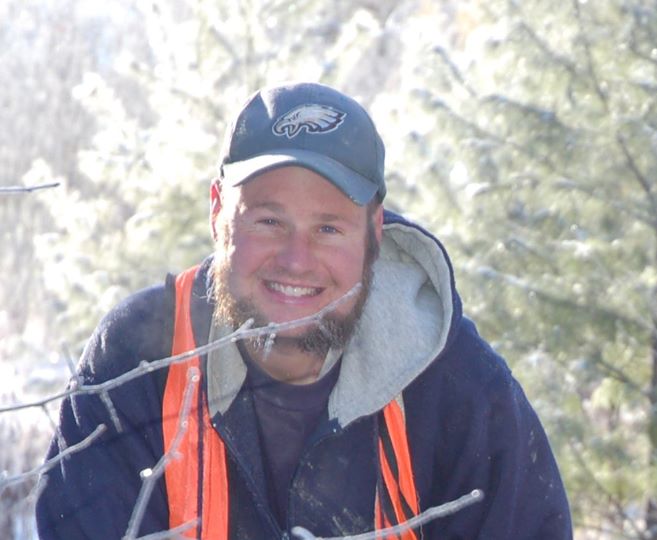
When I’m not writing or procrastinating, I am an archaeologist by trade. I’ve worked for a number of companies all over the Southeast and Mid-Atlantic region; most recently, I’ve been employed by Louis Berger, a major infrastructure company with offices in dozens of countries around the world. This job brought me into contact with another archaeologist who spends his nights turning his fevered thoughts into fiction. This gentleman with the mad muttonchops, Paul Stansfield, is a veteran field archaeologist, a serious sports enthusiast, a top-notch beer pong partner, and a good friend.
56162_103882239679173_7560637_o

This Rutgers graduate and diehard fan is also a talented horror writer. In fact, the first story he told me about features overzealous camper kids who mistake the actors in a low budget zombie film for real undead. When I heard that pitch on the slow, sleepy ride to work in the Ocoee River Basin of Tennessee, I knew I’d have to read it. And maybe one day, I could talk Paul into letting me turn it into a screenplay. For now, I’ll settle for an interview with this new face in horror fiction.

How long have you been writing fiction? And what genre(s) do you prefer?

Somewhere I still have an incomplete science fiction-ish story based on my Legos that I wrote when I was about 10. I completed my first stories at about age 14 or 15. But I really started writing in earnest, and submitting, in my mid 20’s, so it’s been about 20 years total. Horror is my strong genre preference. Some of my stories are hybrids, say action/horror, fantasy/horror, or scifi/horror, but they’re usually at least horror-related in some form.

When writing fiction, do you prefer short stories, novellas, or novels? Why?

I don’t have a preference here. I come up with the story idea, and take it as far as it goes. My output has been mostly short stories, but I have written a few novellas, and three novels that I’m still shopping around.
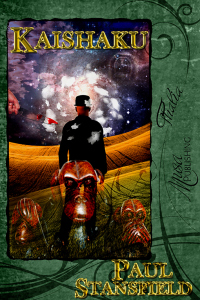
kaishaku

What writer(s) has/have influenced your writing the most?

Probably Stephen King, Dean Koontz, Robert McCammon, and H.P. Lovecraft. And readers have compared stories I’ve written to Edward Lee and Joseph Heller.

Is there a work of fiction that you keep coming back to, one that you can read over and over again? If so, why?

Yes, many. Basically if I really like a novel (or nonfiction book), I’ll almost always reread it, occasionally many times. Obviously I don’t usually forget the major plot points, but I do forget some minor ones, so it’s still entertaining and thought-provoking the second, third, etc. time around. Some examples would be King’s “The Shining,” Scott Smith’s “A Simple Plan,” Thomas Berger’s “Little Big Man,” Frank Herbert’s “Dune,” and William Peter Blatty’s “The Exorcist.”

deadreckoning-200

As a writer, are there common themes or topics that you like to explore?

I don’t intentionally set out to do so—I usually just come up with the story idea and start writing. But looking back, I do see some common themes and topics. Obsession, frustration, guilt (and I’m not even Catholic!), greed, revenge, and finding one’s self, to name a few. Also a fair bit of “body horror” explorations.

Where do you find inspiration for your writing, especially your newest release?

From many things. From movies (“Pink Flamingos,” “Indiana Jones and the Temple of Doom”), books (the folklore encyclopedias called “Man, Myth, and Magic”), real life events (the Winchester House, Genghis Khan, various serial killers, seeing calves’ brains for sale in an Iowa supermarket), and even an educational filmstrip called “Hemo the Magnificent.” For my latest, “Unholy Spirit,” the inspiration was Dalton Trumbo’s great anti-war novel, “Johnny Got His Gun.”
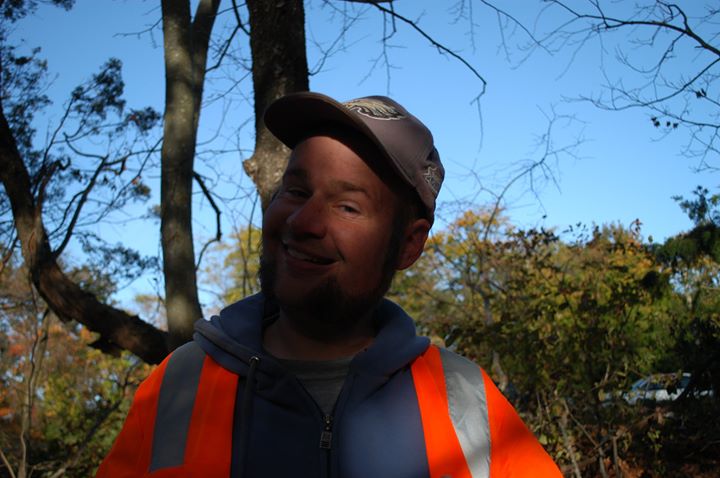
57050_111753498892047_5074764_o

I don’t want to get us in trouble with our bosses here, but during your day job as an archaeologist, do you find yourself creating plotlines in your head or working out story problems as you survey an area or excavate a test unit?

No, not really. Most often, solutions to story problems occur to me while I’m driving, taking a long walk, in the shower, or when I’m falling asleep. Maybe at work I’m too distracted by the ticks, poison ivy, venomous snakes, and even the rare rabid fox!
template

What can you tell us about your newest release? And where can we find it?

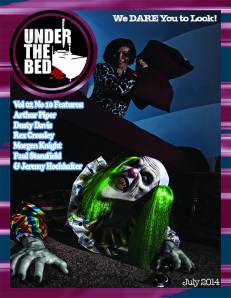
I wrote “Unholy Spirit” right after finishing a novel length manuscript in which the main character was good, and stricken with terrible guilt. So it was a nice change of pace, and quite fun, to write about an unrepentantly evil character like Keisha Cartwright. It was also a cool compliment to hear from a prior magazine editor that this story had freaked out his staff! This story is out in the current issue (July, Volume 2, No. 10) of “Under the Bed” Magazine. The site address is: http://www.fictionmagazines.com. And more information on the story is included below.

Undead Living cover

Finally, where can we find out more about you and your other works of fiction?

My blog address is: http://paulstansfield.blogspot.com , where I talk about writing, sports, underrated movies and books, random thoughts, and mostly, weird and gross foods I’ve eaten. My two ebooks (“Dead Reckoning” and “Kaishaku”) can be found at Musa Publishing (www.musapublishing.com). I also have a story (“Responsibility”) in Sunbury Press’s “Undead Living” anthology, which can be found at: http://www.sunburypress.com

Me at New Comiskey

Thanks for taking the time to answer my questions and tell the readers here more about your work. I look forward to reading all of it. Keep on disturbing publishers and editors and hopefully one day you’ll be scaring the hell out of millions of readers around the world.
D. Alan Lewis & A Double Dose of Lycanthropy

double (1)

With the release of not one but two werewolf-themed anthologies from Dark Oak Press this week, I thought it expedient and enlightening to interview one of the people who made it possible. Author, editor, and good friend D. Alan Lewis has been sweating these two Luna’s Children collections since last year, working diligently to comb through the massive amount of submissions, select the best stories, and then edit them for publication. Though he has not been alone in this daunting task, his drive and dedication have made these anthologies possible.

267639_10150242668613676_623153675_7176085_2115162_n

This is a glowing introduction and rightly so. But then again, I am clearly biased as Alan saw fit to anchor the first volume, Luna’s Children: Full Moon Mayhem, with my edgy, ultra-violent revenge fiction piece entitled “Beta Male, Alpha Wolf.” As editor, Alan also selected my Cycle of Ages Saga story about dwarves on a submarine powered by a dirty nuclear reactor for Capes & Clockwork, Dark Oak’s recent steampunk superhero anthology.

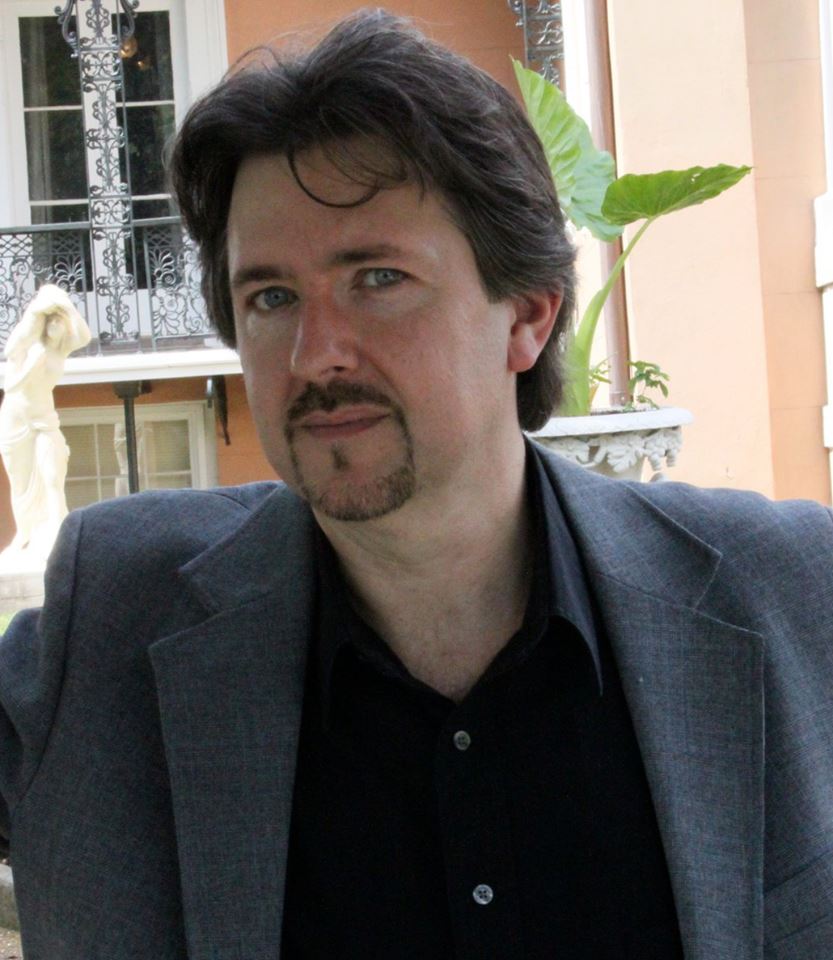
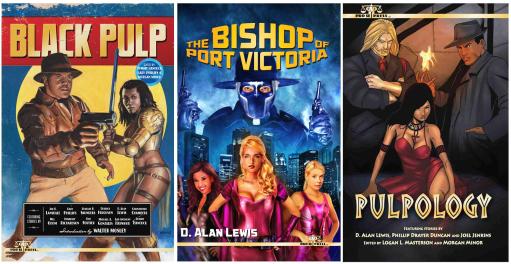
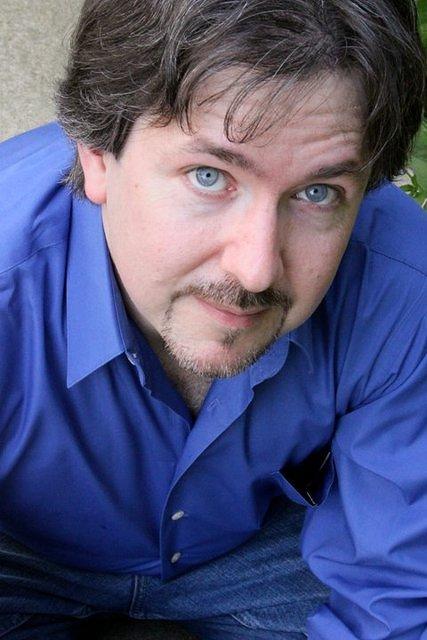
In addition to his duties as editor, technical writer, and father, D. Alan Lewis is a writer of some of the most imaginative fiction to make it onto my bookshelf. When I first met him at MidSouth Con in Memphis, this unassuming, quiet fellow with the wolfish baby blues sat behind a table with his first novel, Blood in Snowflake Garden. After reading the back cover, I took this absurdist Cold War-era noir tale of murder, mystery, and cupcakes at Santa’s North Pole home with me and enjoyed every page. You will never read another Christmas story like this one. Since then, he has written and published several pulp stories and a few novels. Of them, the gritty, unflinching supervillain tale, The Bishop of Port Victoria, is another favorite. Of course, I could go on and on about telling you about this talented technical writer turned genre author and editor; instead, I’ll let him tell you about himself, his influences, and his projects.

Revised-cover-BSG

Q. As writers, we all come from different backgrounds and found our way to this profession in our own way. How did you make the transition from amateur to professional writer? When?

A. I grew up telling stories, some for honorable purposes and some not. As a teen and young adult, I got into roleplaying games and usually ended up running the games, since my friends loved the stories I’d weave for them. I’d toyed with writing for many years, but never got started. This was partly due to procrastination and partly due to a lack of support from family and friends. After my last divorce, I decided to jump in to the writing world with both feet. I hooked up with a writer’s group in Nashville and with their support, I managed to finish my first novel.

From there, it became a matter of networking. I’d been going to SF&F conventions for years, so I started talking to authors and publishers who attend. Those contacts lead to multiple book and story deals. And that leads to the latest work, the 2 Luna’s Children books.

Q. What genre(s) do you write? And do you prefer writing short stories, novellas, or novels? Why?

A. I’m a bit of a writing slut. I write a little bit of everything in all kinds of lengths. I have 3 novels out at the moment; a murder mystery, a pulp/noir tale, and a steampunk adventure. As for short stories, I have steampunk, pulp/noir, superhero tales, horror, and vampire & werewolf stories, and straight-up Sci-Fi.

I don’t have a preference about the length, as long as I have enough room to tell the story that I’m trying to convey.

grey jacket alan

Q. What writer(s) has/have influenced your writing the most? How have they influenced you?

A. Douglas Adams has always been a favorite and a major influence. His works were so ‘over the edge’ at times and I loved that. While I didn’t want to be his clone, I did want to write like him. Early on, all my stories were developed as comedies, but I didn’t feel that I could match his level of craftsmanship. And as I worked, I found that my skills were more along a darker path of storytelling. 

Q. Is there a work of fiction that you keep coming back to, one that you read over and over again? If so, why?

A. Douglas Adam’s ‘The Long Dark Tea Time of the Soul’. I just love it.

Long Dark Tea-Time of the Soul

Q. As a writer, are there common themes or topics that you like to explore?

A. I love surprise twists, so everything I write has something in it that I hope will catch the reader off guard. I also love having tortured, troubled characters. As far as topics, I don’t have anything that I include in every story.

Q. As an editor, where do you find the time and patience to edit something as daunting as an anthology?

A. Patience is needed in ample amounts, some of the time. It never fails to amaze me that some authors will send in a story riddled with errors, but if an editor misses one and it gets in the final product, those same authors will throw a fit.

 As the first reader, I look for a story first. Does it fit a need that my anthology needs? If so, then I look at the errors. If there are too many, I send them back to the authors and explain what mistakes I’m seeing and ask them to rewrite it. Then, once it comes back, I get to work. With Luna’s Children, there were so many stories that I had a team of editors helping me with all the stories, making sure that I didn’t miss anything. 

With Capes & Clockwork, I was dealing with mostly established writers who knew their craft. I also had only 16 stories to deal with, so that anthology fell into place quickly and efficiently. The Luna’s Children books were the complete opposite. While there were a number of talented writes, there are a lot of first-timers. Still, many of those first-timers were giving me great stories, underneath all the mistakes. Luna’s Children includes 43 stories in the 2 volumes, which were drawn out of over a 150 submissions.

 Needless to say, the werewolf stories took much longer to weed through, edit and put together.

1503114_10201633813820961_1452077664_o

Q. What special challenges do you face in editing an anthology versus a novel?

A. An anthology is a collection of stories from OTHER people. These are not my stories, so I can read it as an outsider and can spot problems and issues. When I edit my own stuff, I have to try and remember not to read it as the writer but as an outsider. While in my mind, I know how a scene is playing out in the words. But as the reader, is that scene playing out in the same way? Sometimes as a writer, you can’t see the obvious mistakes since you’re too close to the story. 

Q. What can you tell us about your newest releases, the two volumes of Dark Oak Press’s werewolf-themed Luna’s Children anthologies? And where can readers find it?

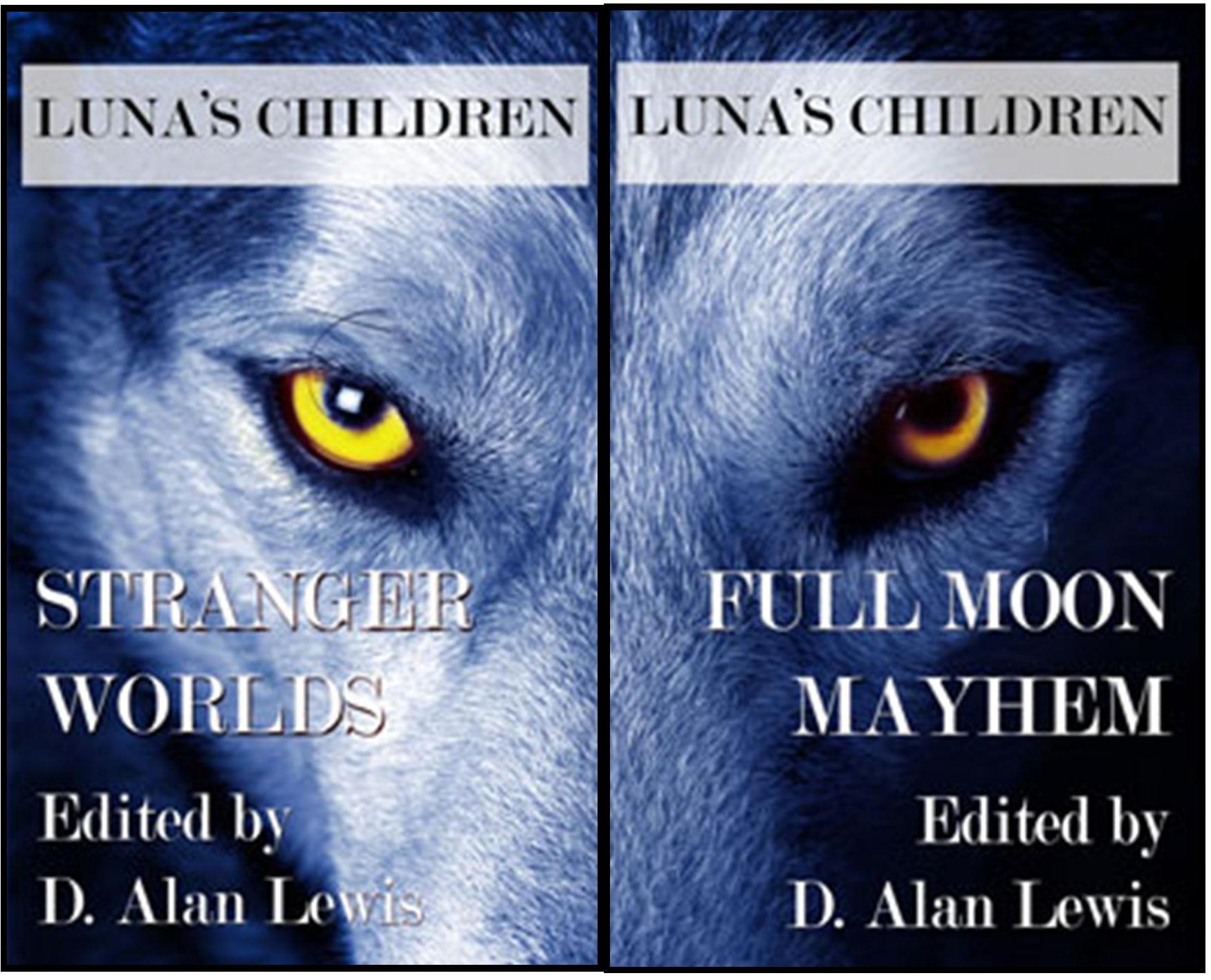
A. Luna’s Children: Full Moon Mayhem and Luna’s Children: Stranger Worlds is now available on Amazon Kindle and will soon be available in print and other ebook versions. All will be available at your local and online book retailers. 

Full Moon Mayhem contains 22 stories that are more based in the real world. While, the 21 stories in Stranger Worlds takes the werewolf genre into new worlds, other times, different realities.

cover color alan

Q. Now that these collections are finally being released, what will you be working on next?

A. Currently, I am working on the submissions for Capes & Clockwork 2, which is an anthology of Steampunk’d superhero stories. The first volume came out early this year and was such a hit that the second book was green lit immediately.

In addition to that, I’m working on short stories for the upcoming ‘Black Pulp 2’ and ‘High Adventure History 2’, both from Pro Se Productions. I’m also outlining an untitled Steampunk/Noir detective story that I hope to have out by year’s end. In the long term planning, are the next books in the Hawke Girls and the Snowflake Garden series.

wolfe covers

Q. Finally, where can we find out more about you and your other works of fiction?

A.  My website/blog is:  www.dalanlewis.com

      I am on twitter:  @Dalanlewis

      I’m on Facebook:  http://www.facebook.com/AuthorD.AlanLewis

     And I have an author page on Amazon:  http://www.amazon.com/D.-Alan-Lewis/e/B006DA9P2U/ref=sr_ntt_srch_lnk_2?qid=1331611519&sr=8-2


Thanks for sitting with us for the interview today, Alan. Good luck on your future projects and upcoming appearances. In the proud tradition of tired werewolf cliches, I hope you have a howling good time. 😉